

The Top Three Reasons for Dog Behavior Problems
I’ve been reflecting about all the dogs I’ve helped this year, and throughout my business journey since opening in 2019. It’s likely that most dog behavior professionals could easily identify the top three reasons for dog behavior issues, as we often discuss behavior cases. The ironic part is that most dog owners probably wouldn’t be able to guess these primary cause of dog behavior problems.
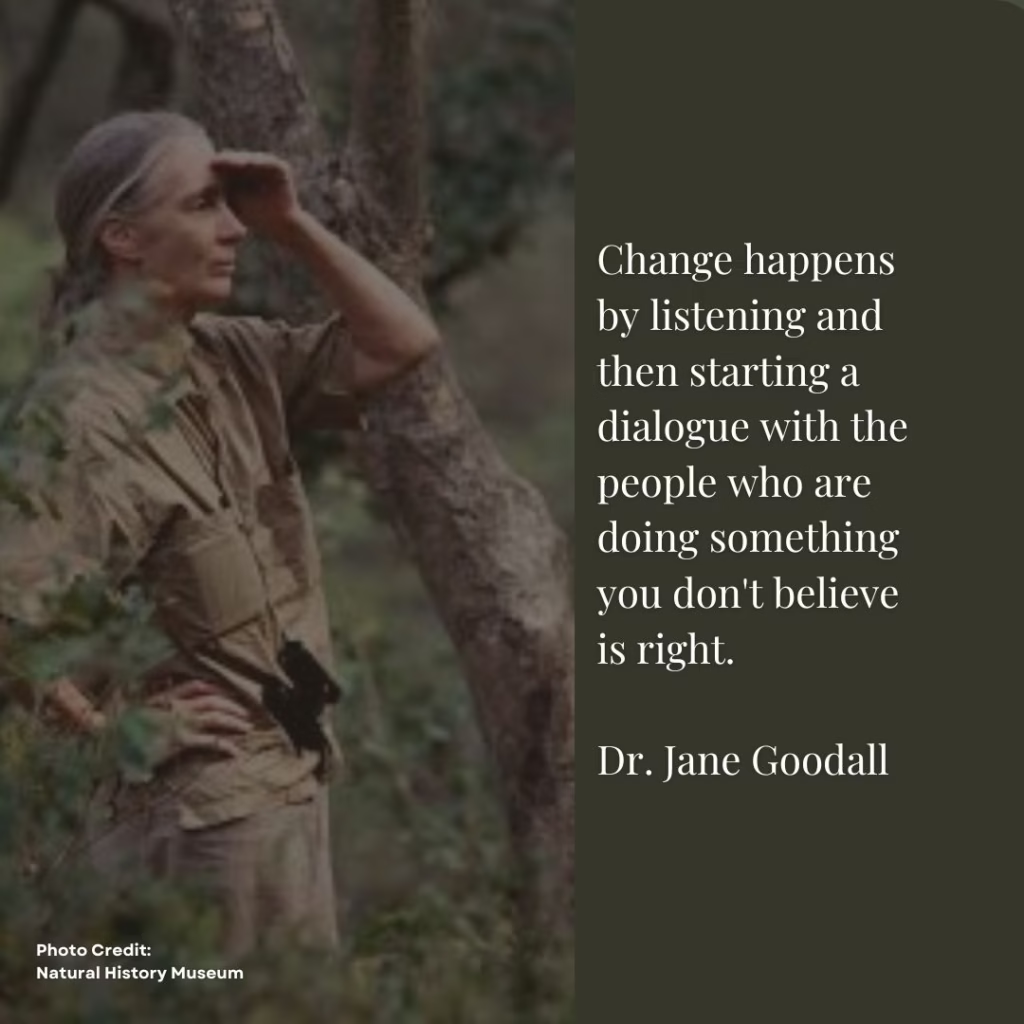
Behavior is Communication
Behavior is a clear form of communication. In fact, more than 50% of communication is understood through body language. After reviewing many cases, I consistently identify three common problems and their corresponding list of solutions. These patterns put a spotlight on a cultural issue.
We Talk Too Much
Most Americans live in a fast-paced world, constantly prioritizing what needs to be checked off the list of things to do. Most of our interactions are quick exchanges shared online. Burnout remains critically high.
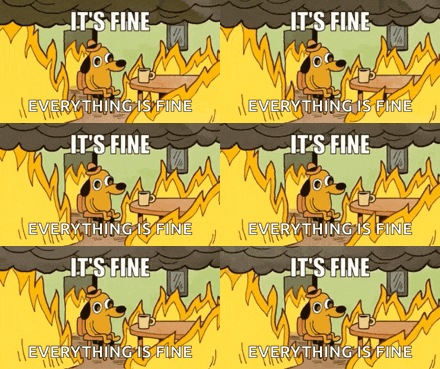
It’s fine. Everything is fine. We lack the ability to truly pause and listen to our own bodies, let alone be curious enough to what our dog’s behavior is communicating.
Pattern #1: Subtle Stress Behaviors Are Happening All Day Long
We all know that feeling after a horrible night’s sleep. Everything feels harder. Our patience is a little thinner. A minor inconvenience feels catastrophic… That’s your dog, except you might not recognize all the subtle stress signals they are displaying all day long because through our eyes – nothing is going on.
Subtle stress signals look like:
- Panting or tongue flicking over their nose
- Frequently scanning the room at every noise or movement
- Inability to settle, even when invited to rest
- Constantly seeking interaction with you or other household pets.
- Difficulty focusing on one task at a time
Most dog owners don’t connect these dots to a sleep deficiency. because:
- My dog has always been high-strung
- My dog is always really excited
I can hear you say it now…”There is no way! This dog sleeps like a rock all night!” I politely smile and ask, “And your dog can sleep through people moving in and out of the room?” That’s usually when they pause and confirm, “Well, no. When I get up and leave the room, the dog opens their eyes or follows me out.”
Pattern #2: Nowhere Safe to Reliably Rest That Feels Right
Since dogs are social mammals, it’s understandable that some owners hesitate to use a crate regularly, especially with a young or newly adopted dog. Independent rest matters more than we think. We all grew up hearing, “A tired dog is a good dog”, right?
The truth is, many dogs have never been taught how to restrain themselves or simply not be involved. This has become an even bigger challenge now that it’s more common for people to work from home. The art of teaching a dog to do nothing and just rest near us is incredibly undervalued and often overlooked.
Subtle stress signals look like:
- Resting in High-Traffic Areas: The dog monitors everything by sleeping in locations like hallways, doorways, or the front window.
- Inappropriate Bedding Placement: Beds are placed in high-traffic or highly stimulating areas. (many dogs need to develop independent resting skills in quieter spots before they can handle stimulating environments.
- Lack of Suitable Resting Spots: The home offers no appealing places for the dog to rest, leading to constant high arousal and conditioning them to have ever-lasting energy.
- Inadequate Comfort or Personal Space:
- The dog lacks a truly comfortable bed or multiple resting places (cool, warm, orthopedic, thin).
- Dogs are often resting on top of another pet instead of having their independent, suitable resting spots.
Pattern #3: Something Medical We Can’t See
Dogs are stoic.
One of the most useful and well-worth the extra education towards dog behavior is learning how to identify subtle signs of pain and I can often identify the dog is in pain just by learning a healthy gait of a dog. It’s in their genetics. A dog in pain often won’t limp or whine. Instead, they get reactive, irritable, or defensive. Their threshold for everything decreases.
We cannot override the physiology of a dog’s genetic inheritance. If something hurts, if something’s uncomfortable, if the dog’s body is physiologically struggling – training alone WILL NOT fix it.
Is Medical The Underlying Missing Piece?
Not every behavior problem is medical. But medical problems ALWAYS worsen behavior. Before you invest in dog training or behavior modification, these signs warrant a visit to the veterinarian:
- Aggressive or fearful behaviors – Especially when they seem disproportionate to the situation, or when they appeared frequently and suddenly started.
- Excessive barking or heightened sensitivity to environmental changes – A dog who’s physically uncomfortable gets defensive about minor shifts in their environment.
- Excessively drinking water in one sitting – this screams that the dog’s body is feeling abnormal.
Do any of these things sound familiar?
If this any or some of this resonates with you, contact Amanda today! These are the messy, honest truths that form the foundation of Ruff to Ready. We understand that life is ruff. We can’t eliminate every stressor, always find time for more exercise, or prevent the occasional issue stemming from an underlying medical condition. So let’s break it down to the basics.
What else is Amanda up to?
For more updates on blog posts, podcast episodes, and more, sign up for Amanda’s newsletter here.